Keep Proof Current. Share It Clean. Close Reviews Faster.
Your team maintains one evidence record. When the next audit, security review, or renewal arrives, controls are mapped, evidence is current, and the reviewer package ships in minutes.
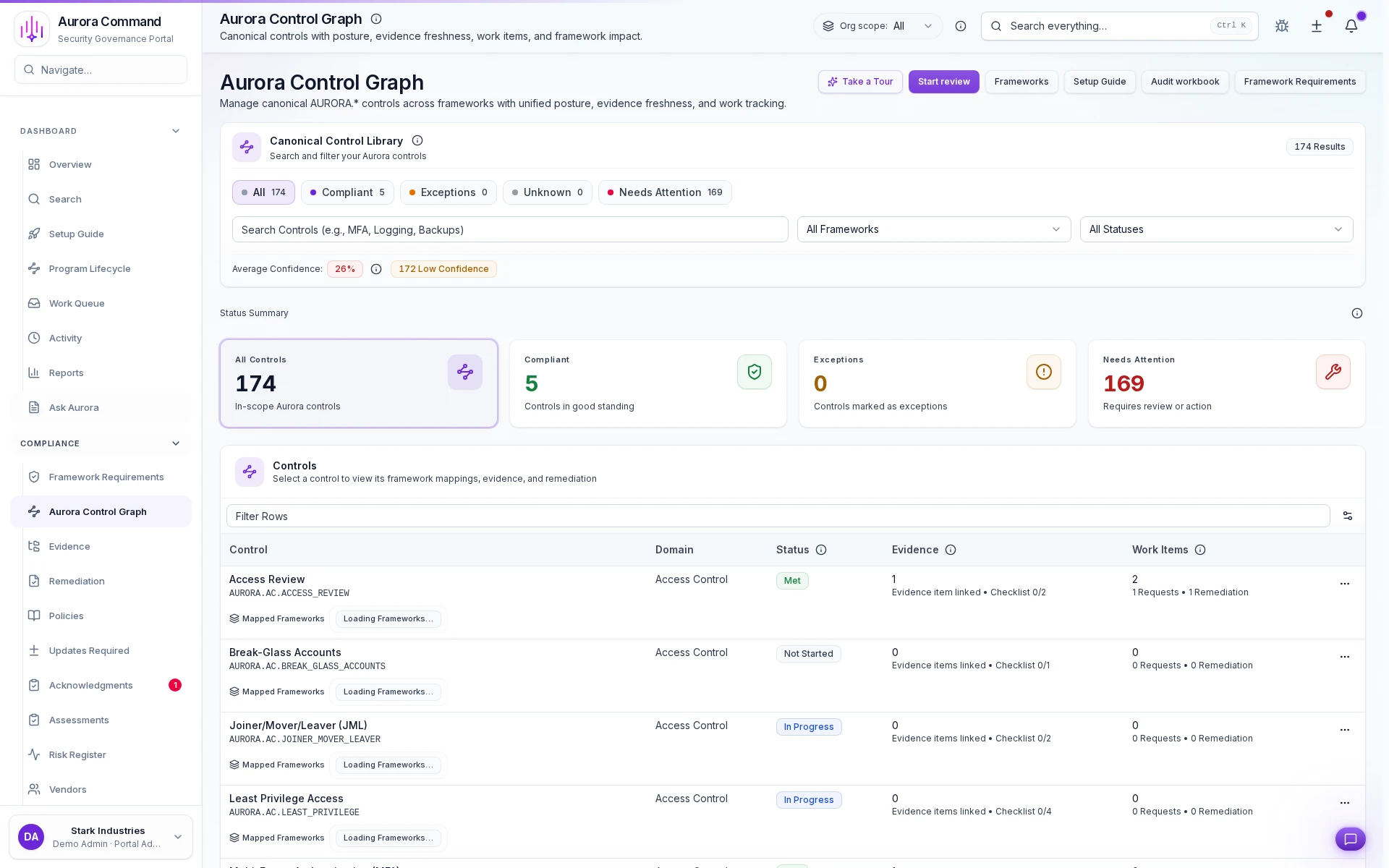
Map controls, attach proof, and keep related work in one view.
Start with the Review in Front of You
Check evidence coverage, owners, and exports before the audit window opens.
Prepare cited answers and clean reviewer sharing for buyer diligence.
Show exercises, incidents, and follow-through in one record.
Aurora Runs the Program. It Does Not Replace Your Auditor.
- Run and document compliance work in a repeatable workflow
- Map frameworks to one control library and reuse evidence
- Keep evidence current with freshness tracking, owners, and reminders
- Give reviewers structured access with tiered permissions and logs
- Export organized files when a reviewer requires a document
- Track risks, remediation items, and policy approvals
- Guarantee compliance outcomes or audit results
- Replace an auditor, assessor, or legal counsel
- Make compliance decisions on your behalf
- Claim to meet all requirements automatically
Aurora keeps the work organized and review-ready. Your team, auditor, and counsel still own the final judgment.
See Aurora in Action
Core Platform Walkthroughs
See how governance, evidence, and controlled sharing connect in one audit-ready workflow.
Operations Walkthroughs
See how remediation tracking, reporting, and program lifecycle keep work moving between reviews.
Browse All Walkthroughs
Open the full demo hub and choose the scenario closest to your next review.
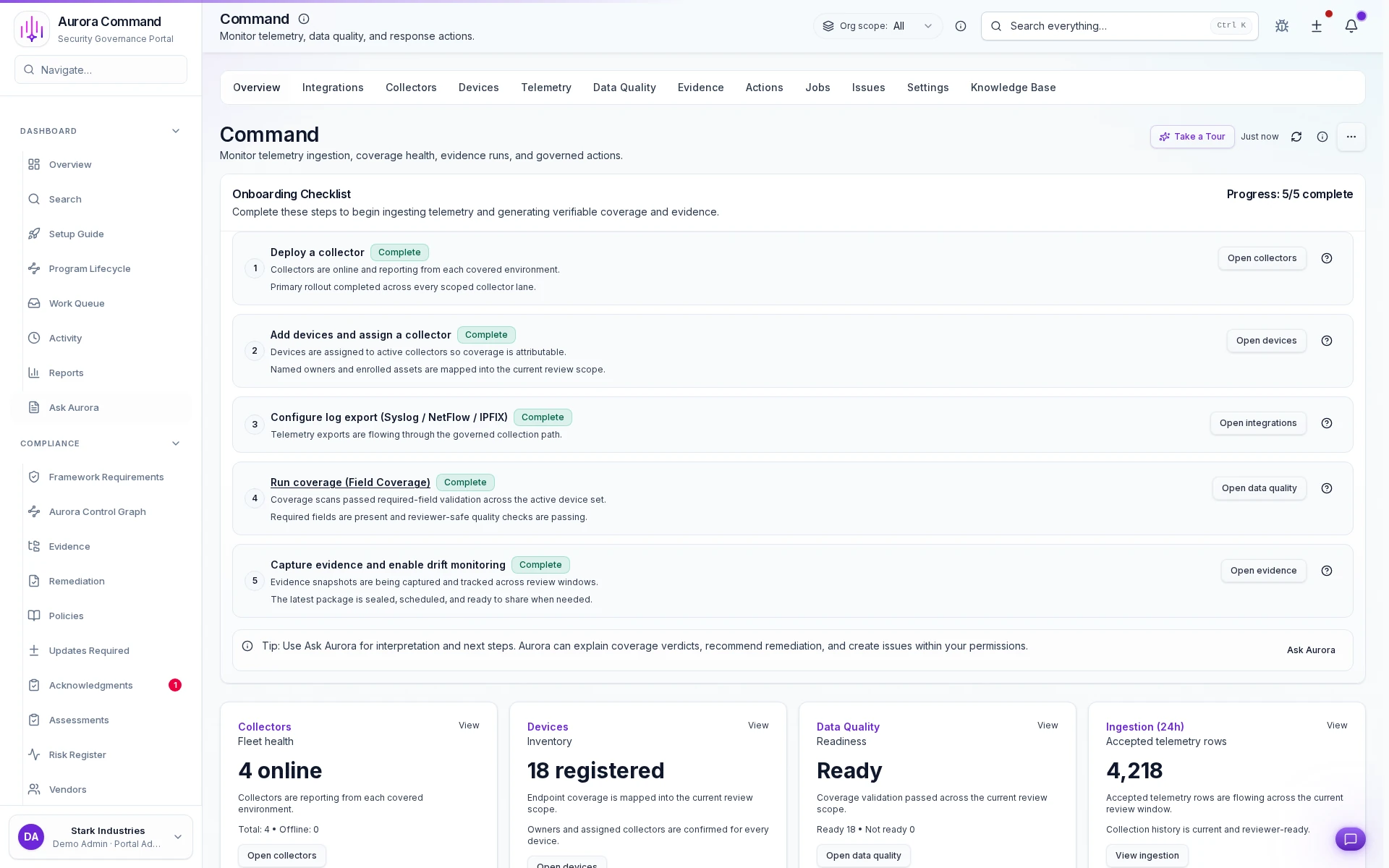
Real workflows. Real evidence. Choose the review scenario closest to what is on your desk.
One Workflow for Reviews, Renewals, and Response
Respond to audits and security reviews from one continuously updated evidence base, even when the reviewer changes or the scope shifts.
Every Team Updates the Same Proof Record
Keep the Program Moving Between Deadlines
Drive work from onboarding through the next review deadline.
Build live dashboards and export report snapshots in minutes.
Give auditors read-only evidence access without exposing the workspace.
See device coverage and control status in one view.
Keep your written security program current, approved, and reviewable.
Route advisory requests with clear owners and status.
Know What Is Stale Before Reviewers Do
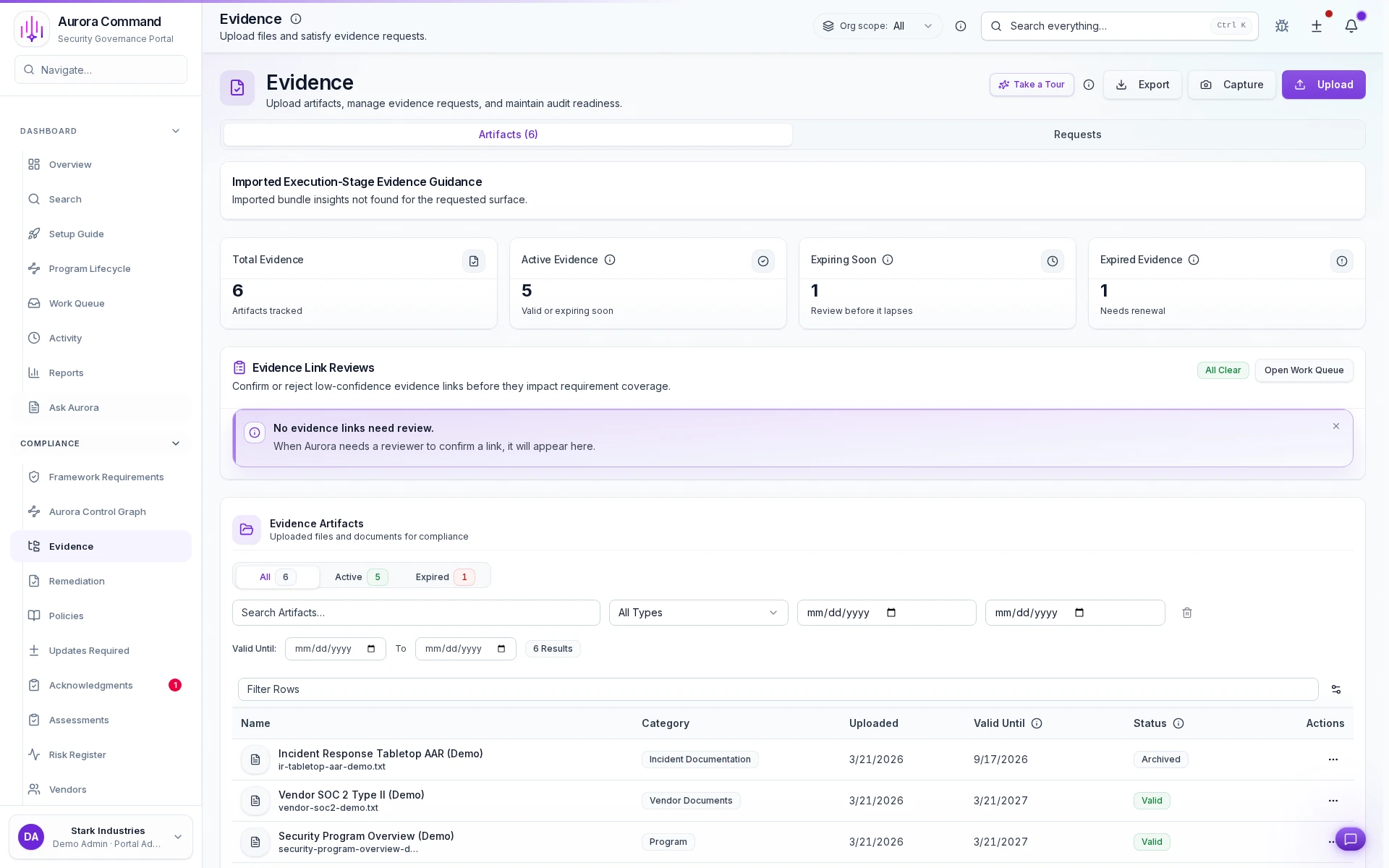
Freshness state at a glance
See which artifacts are current, expiring, or stale without opening each one.
Connected Systems
Scheduled checks keep live evidence current without manual chasing.
Uploaded Proof
Upload exports and keep history, freshness, and ownership visible.
Attestations and Approvals
Track the work no connector can do for you - with owners and review schedules.
Share Proof without Shared Logins or Attachment Chaos
Controlled Reviewer Portal
Give buyers and auditors a dedicated portal with only the documents their review requires.
Governed Exports
Export a timestamped, watermarked package when a reviewer needs files.
Full Activity Trail
See who viewed, downloaded, or exported evidence before follow-up questions arrive.
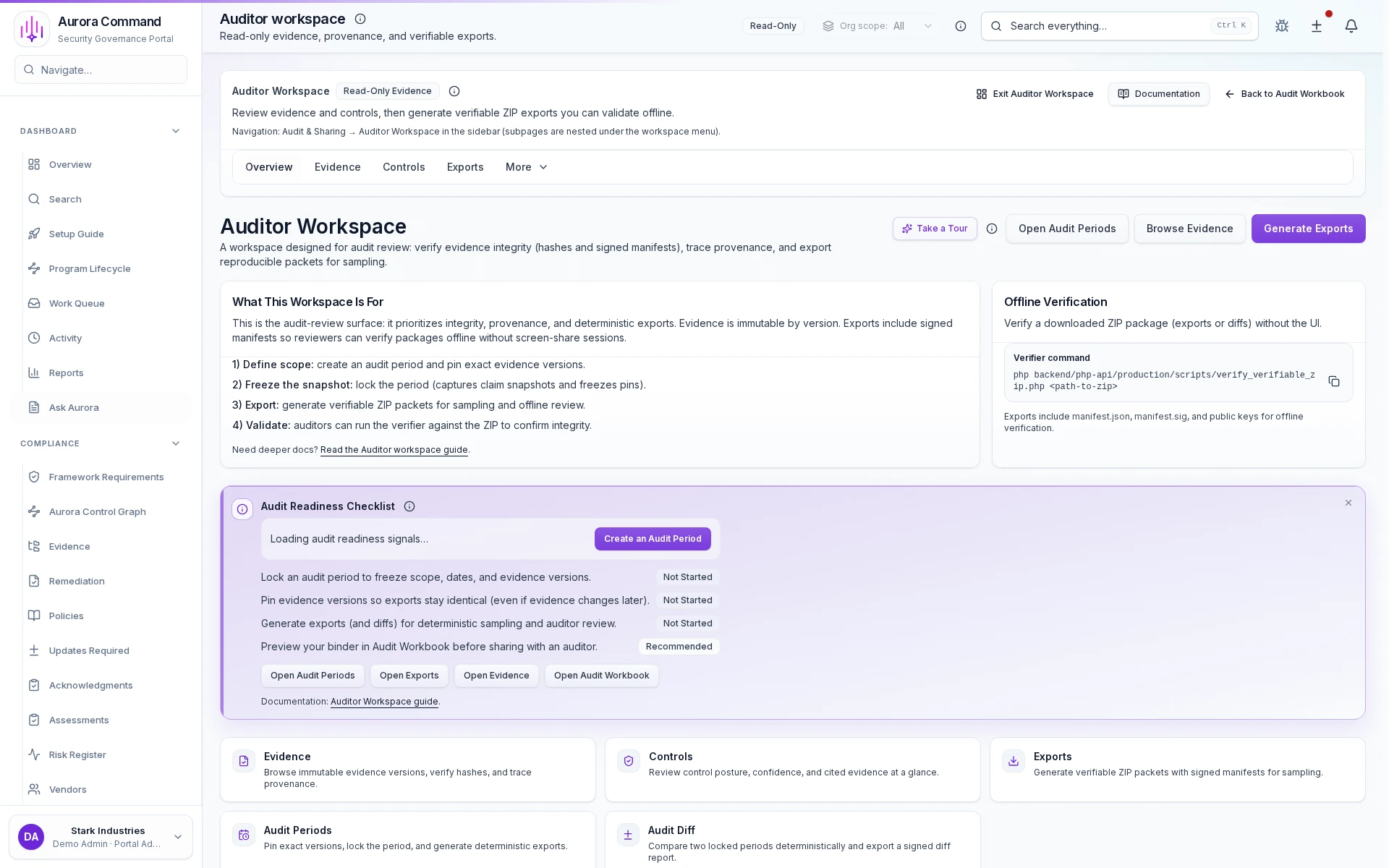
Scoped reviewer views
Give each buyer, auditor, or insurer only what their review requires, with tiered access and expiring links.
Deliver a credible handoff to reviewers without losing control of what was shared or who accessed it.
Track Risks, Decisions, and Remediation in One Record
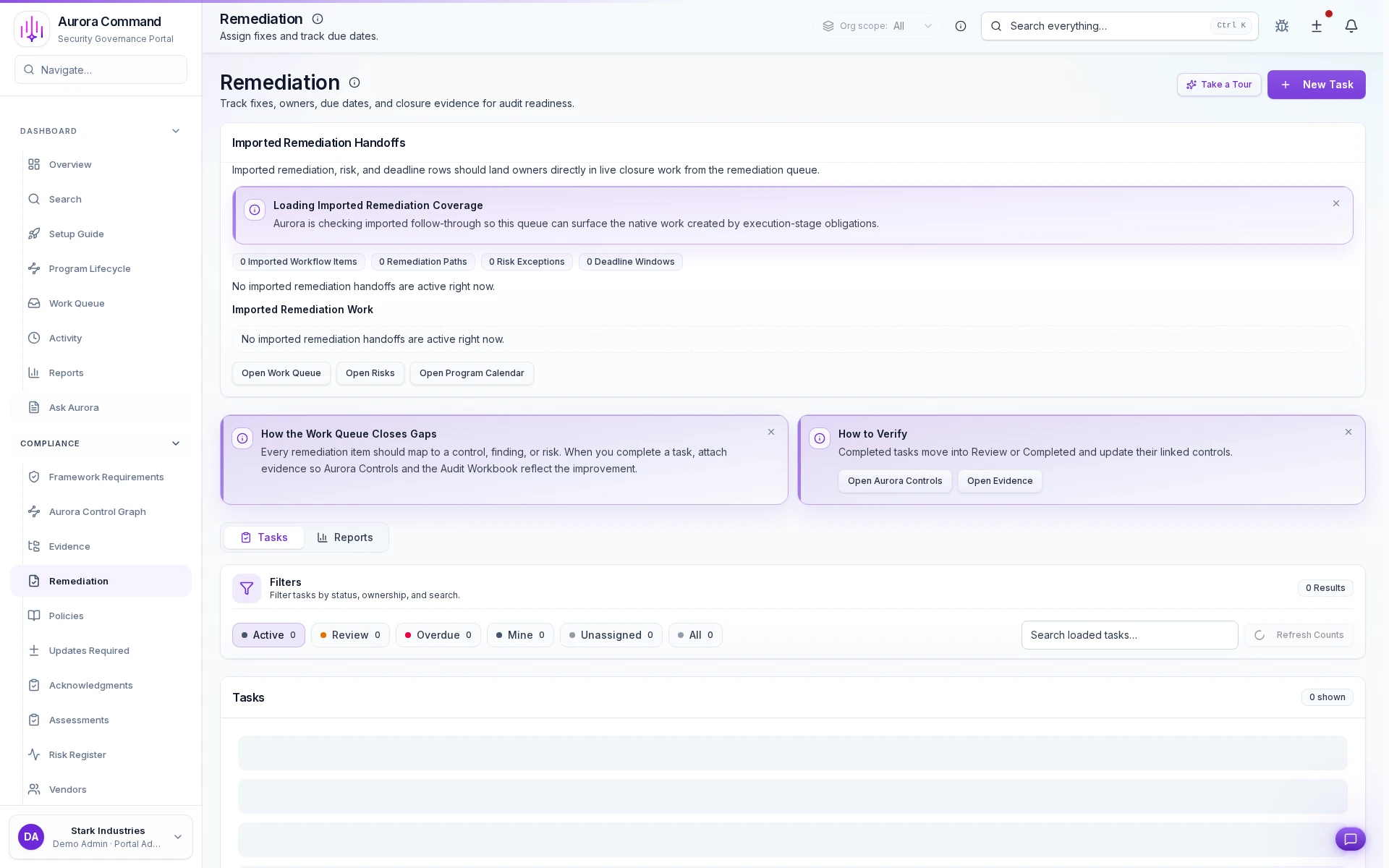
Assigned owners with deadlines
Every remediation item has a named owner and a due date that surfaces before it slips.
Show the Records Behind Training, Exercises, and Response
Prove your team practices, not just that policies exist on paper.