Feature
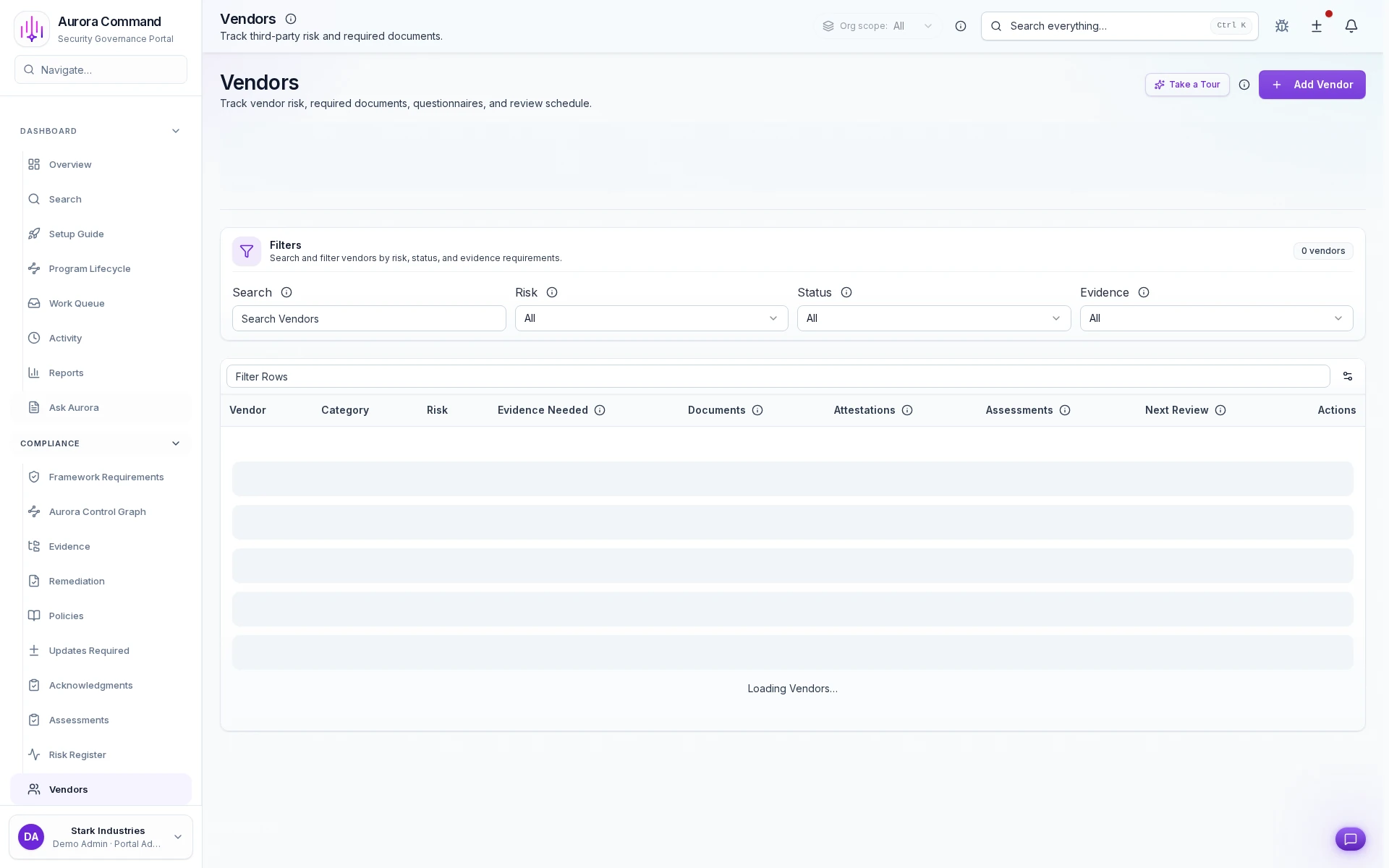
Assigned Vendor Reviews: Send vendor questionnaires, track completion, and keep the full diligence trail on record.
Assign vendor assessments, request artifacts, and record outcomes. Aurora keeps the trail: who was asked, what was provided, and when it was reviewed.
Send vendor questionnaires, track completion, and keep the full diligence trail on record.
- Approvals stay attributable:Policy, control, and decision changes keep a visible owner and review trail.
- Controls map once:Reuse the same operating record across overlapping frameworks and reviewer asks.
- Evidence stays tied in:Governance decisions stay connected to the proof and timestamps behind them.
- Changes stay defensible:Keep the program current between audits instead of rebuilding the story from scratch.
Sample output
Assessment record
Verifiable proof reviewers can follow
Replace Vendor Risk Spreadsheets With One Record
Run vendor reviews on a governed cadence
Catch vendor renewals before they lapse
Pin every required document to the right vendor
How Teams Run Vendor Reviews Without Inbox Sprawl
01
Intake the vendor and scope
Capture the right context at the start so the review is proportional to the actual risk.
02
Collect due diligence evidence
Keep questionnaires, documents, and supporting proof tied to the same vendor record.
03
Review answers and gaps
See what is missing, what is acceptable, and what needs follow-up without a side spreadsheet.
04
Track follow-up owners
Keep accountable next steps visible until the review is truly closed.
05
Share a reviewer-safe packet
Package the final record so internal stakeholders and auditors can follow the decision path quickly.
What This Adds To Vendor Reviews
Feature 1 of 5: Designed for
1/5
Designed for
Vendor reviews • SOC 2
Artifacts reviewers recognize, plus sample previews of structure.
Scroll for artifact previews
Connect The Systems Around Third Party Review
Questions Teams Ask
How do policies, controls, and approvals stay tied together?
How do policies, controls, and approvals stay tied together?
Aurora keeps version history, ownership, approvals, and related evidence attached so the governance record is easier to defend later.
What does the team actually share from this work?
What does the team actually share from this work?
Teams usually share Assessment record; Document request log; Review history. The goal is to give reviewers the right package without making them reconstruct how the program operates.
Where does this help most in recurring audits?
Where does this help most in recurring audits?
It fits best when the team is handling Vendor reviews, SOC 2 and needs the work to stay reusable instead of being rebuilt each cycle.
What changes after rollout?
What changes after rollout?
Standardize vendor reviews Reduce manual follow-up
Share The Framework, Control Set, Or Policy Review You Keep Rebuilding.
We’ll show how Aurora keeps approvals, change history, and evidence connected so the next review starts from current work.
Share one request and we will show the path to assessment record without losing approvals, ownership, or reviewer context.